
Skip to content
Supply Chain Risk Management – Resilinc
  • Products
        • OUR OFFERINGS

        • Agentic AI SuiteAutonomous risk management and compliance
        • AI AgentsIndustry and use case-specific analysis and action
        • Multi-Tier Mapping and MonitoringComplete end-to-end supplier visibility
        • RiskShieldProactive supply chain risk protection
        • EventWatchAIReal-time global event tracking
  • Solutions
        • BY INDUSTRY

          • Aerospace and Defense
          • Healthcare and Life Sciences
          • Automotive and Industrial
          • High Tech and Semiconductor
        • BY ROLE

          • Supply Chain Resiliency
          • Sourcing and Procurement
          • Executive Leadership
          • AI and Data Science
        • BY TOPIC

          • Supply Chain Risk Management
          • Supply Chain Compliance
        • BY SERVICE

          • Advisory Services
          • Managed Services
  • Resources
        • LEARN

        • Blog
        • Special Reports
        • Demos and Training
        • Case Studies
        • White Papers and Reports
        • Podcasts and Webinars
        • eBooks
  • Company
        • ABOUT US

        • Careers
        • About Resilinc
        • Events
        • Press Releases
        • In the News
        • Partners
        • Contact Us
Sign In
Schedule Demo
Supply Chain Risk Management – Resilinc
  • Products
    • Agentic AI Suite
    • AI Agents
    • Multi-Tier Mapping and Monitoring
    • RiskShield
    • EventWatchAI
  • Solutions
    • By Industry
      • Aerospace and Defense
      • Healthcare and Life Sciences
      • Automotive and Industrial
      • High-Tech and Semiconductor
    • By Role
      • Supply Chain Resiliency
      • Sourcing and Procurement
      • Executive Leadership
      • AI Data Scientists
    • By Topic
      • Supply Chain Risk Management
      • Supply Chain Compliance
    • By Service
      • Advisory Services
      • Managed Services
  • Resources
    • Blog
    • Special Reports
    • Demos and Training
    • Case Studies
    • White Papers and Reports
    • Podcasts and Webinars
    • eBooks
  • Company
    • About Resilinc
    • Careers
    • Events
    • Press Releases
    • In the News
    • Partners
    • Contact Us
  • Sign In
  • Schedule Demo
  • Products
    • Agentic AI Suite
    • AI Agents
    • Multi-Tier Mapping and Monitoring
    • RiskShield
    • EventWatchAI
  • Solutions
    • By Industry
      • Aerospace and Defense
      • Healthcare and Life Sciences
      • Automotive and Industrial
      • High-Tech and Semiconductor
    • By Role
      • Supply Chain Resiliency
      • Sourcing and Procurement
      • Executive Leadership
      • AI Data Scientists
    • By Topic
      • Supply Chain Risk Management
      • Supply Chain Compliance
    • By Service
      • Advisory Services
      • Managed Services
  • Resources
    • Blog
    • Special Reports
    • Demos and Training
    • Case Studies
    • White Papers and Reports
    • Podcasts and Webinars
    • eBooks
  • Company
    • About Resilinc
    • Careers
    • Events
    • Press Releases
    • In the News
    • Partners
    • Contact Us
  • Sign In
  • Schedule Demo

Home / Blogs / An update on copper

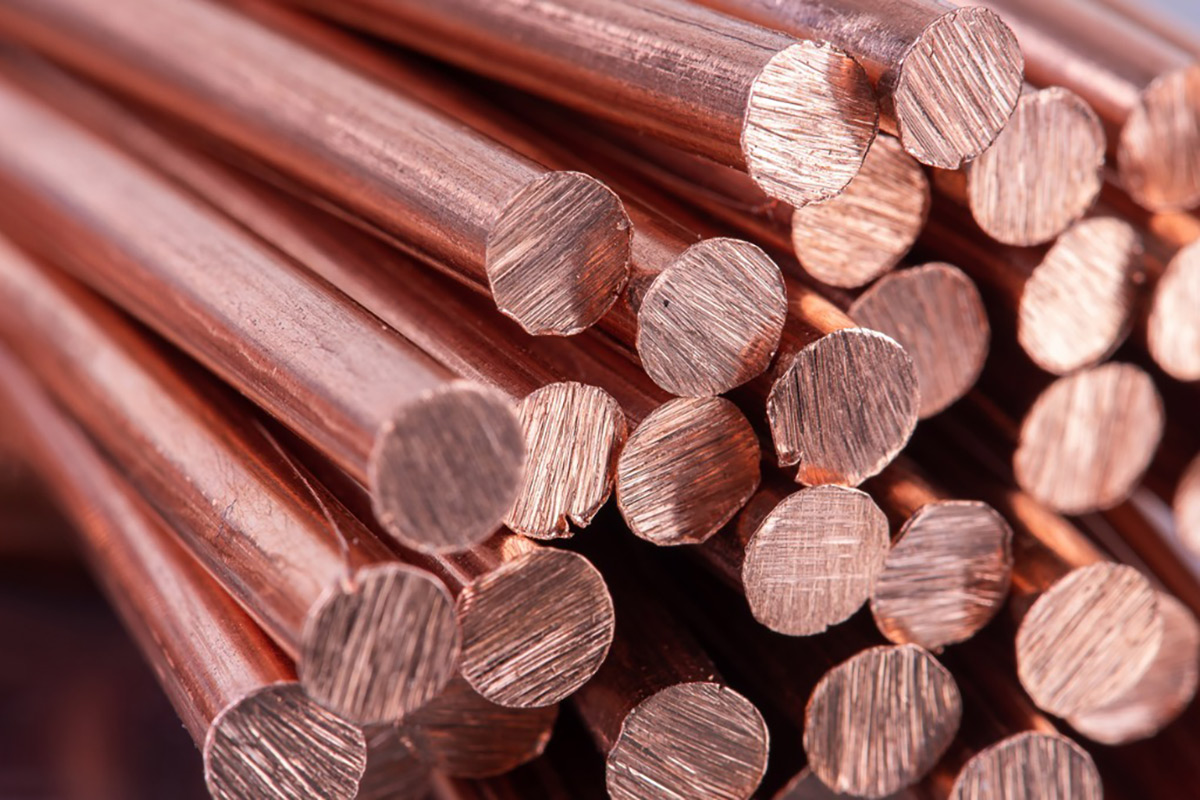
Copper Image

An update on copper

Oct 18, 2022

Resilinc Editorial Team

Commodities, Commodity management, Supply Chain Visibility

There’s no metal quite like copper. It was the first metal to be smelted (about 5,000 BC, according to Wikipedia); the first to be shaped into molds; and the first to be alloyed with another metal—tin—to manufacture a sturdier cousin: bronze.

Since the discovery of electromagnetic induction in 1831 and the development of the first dynamos for electricity generation in the 1870s, copper has been the preferred electrical conductor for electric power generation and distribution, telecom, and electrical equipment.

Because copper is especially sensitive to global economic expectations, copper prices are currently 30% below the highs they reached in H1 2021 and at their lowest levels since November 2020, according to WSJ. While that’s temporary good news for buyers of copper and not-so-good news for sellers, copper producers are no strangers to these kinds of price fluctuations. Freeport McMoran, the second largest copper producer globally, reported in its latest quarterly: “While we recognize the near-term volatility in our markets, we are optimistic about our portfolio of assets, our strong management and operating teams, and the long-term prospects for the copper markets we serve.”

Those “long-term prospects” are embodied in the growing wave of green energy investment and the electrification of transport, heating, industrial processes, and other energy uses that now rely on fossil fuel combustion. Copper will be uniquely important for this massive transition in how energy is produced and used. The International Energy Agency expects demand for copper associated with the clean energy transition and electrification to grow by at least 50% and as much as 300% by 2040.

According to the IEA report, clean energy technologies such as solar PV, wind turbines, and electric vehicles require far more minerals than conventional fossil fuel energy technologies. “A typical electric car requires six times the mineral inputs of a conventional car, and an onshore wind plant requires nine times more mineral resources than a gas-fired power plant.”

While demand for lithium, cobalt, nickel, manganese, graphite, rare earth elements, and other critical minerals is also expected to grow significantly with the clean energy transition, “copper is a cornerstone for all electricity-based equipment,” states IEA.

Copper mining also faces a host of challenges and barriers. Declining ore quality from Chile, the top producing country, will lead to higher energy usage and costs for processing, according to IEA. Growing scrutiny of ESG impacts of mining is strengthening demand for sustainably sourced metals—but IEA worries that “higher-performing supply chains may not be sufficient to meet demand.” Finally, mining assets are exposed to growing climate risks, with copper and lithium “particularly vulnerable to water stress.”

Geographically speaking, copper is produced by “a very narrow supply base,” according to Mining Technology: “65% of documented copper resources in just five countries: Chile, Australia, Peru, Mexico, and the US.” Beyond mining, the processing and refining industrial base is even more narrow. “China is the leading importer and exporter of refined copper and home to 9 of the 20 biggest copper smelters in the world,” stated the trade journal’s Zachary Skidmore—who also pointed out that this narrow supply base has made the global copper supply chain vulnerable to strikes in Peru and COVID-19 disruptions.

With copper prices in a trough now, industry participants and analysts are doing their best to analyze when new demand from clean energy investment will pivot the market. Fitch Ratings forecasts that markets for “energy-transition metals will remain balanced over the medium term as committed and probable projects come online. Supply gaps might emerge after 2025 … with the expected rise in demand created by the energy transition.”

The analysts observe that a key variable will be the level of investment by miners and other value chain players in new copper capacity. Fitch views the mining industry as more capable of making such investments now than 10 years ago—thanks to improved “financial discipline.” But low commodity prices and high interest rates will make equity and debt for new or renovated mines more challenging. “Current prices for copper are insufficient to support new mine supply development, which is expected to add to future supply deficits,” agreed Freeport McMoran.

With the United States currently ranked fifth in copper production—and producing less than one-third of global leader Chile—a major question in the future of copper is how and when domestic production can be increased. Investment in domestic copper mining has been held back by higher costs, environmental restrictions, and pushback from mine-adjacent communities. As reported by the Wall Street Journal: Alaska’s Pebble Mine— which “could be one of the world’s largest suppliers of copper and gold”—hit a crippling regulatory roadblock in May when the EPA banned the disposal of wastewater within 300 miles of the mine site. “Minerals and metals will still be mined, but in countries with far fewer environmental protections such as Indonesia, the Democratic Republic of Congo, and China,” wrote the WSJ editorial board.

Mining Technology’s Zachary Skidmore lists a broader set of solutions to “alleviate the pressure on the [copper] supply chain.” These include:

  • Copper producers should use “data-driven analytics and artificial intelligence … to pinpoint which customers represent the most significant revenue potential for the least cost and prioritise serving those targets.”
  • Greater investment in a circular supply chain that will produce more “refined copper from high-grade scrap and secondary refining capacity.” Skidmore notes that “Japan and China have made excellent progress in creating a circular copper supply chain.”

Aluminum can also be substituted for copper in many applications—indeed, some local governments are rewiring utility poles and other infrastructure with aluminum instead of copper conductors as a strategy to reduce theft of copper wire. While less conductive than copper, aluminum is much lighter and has lower recycle value.

IEA points out that aluminum is already the preferred material for long-distance overhead electrical transmission lines due to its weight advantage. But copper’s “superior technical properties” such as conductivity, corrosion resistance, and tensile strength make it hard to substitute for most applications.

Copper is one of the many minerals and commodities that Resilinc helps its customers stay on top of through CommodityWatchAI, our AI-powered tool that monitors over four million data sources and trends to predict price fluctuations.

While it’s true that there’s no metal quite like copper, there are great differences in OEMs’ ability to monitor, anticipate, and take advantage of trends in copper supply, demand, and pricing. Armed with data, companies can make better strategic purchasing decisions, negotiate more favorable contracts, and more effectively protect their continuity of supply of copper materials and products.

Read our recent Special Report: Copper Supplies

Key Insights

Recent Posts

How Resilinc and HIRC are advancing real-time healthcare supply chain resilience

The 2026 Supply Chain Cyber Risk Checklist: 5 Critical Questions Every Leader Must Answer

The Big Questions Businesses Are Asking About Autonomous Supply Chain Mapping

How Calix Is Transforming Its Supply Chain With Intelligent Disruption Response

How to Turn Supply Chain Tariff Risk into a Competitive Advantage

AI Has Sparked a Supercycle, but Can Semiconductor Supply Chains Keep Up?

5 Supply Chain Risk Questions Keeping Leaders Up at Night — And What To Do About Them

What China’s Rare-Earth Export Pause Reveals About Trade Policy Supply Chain Risk

About Resilinc

We’re the world’s leading supply chain monitoring, mapping, and resiliency solution. Over 100k organizations partner with us to take their SCRM programs from reactive to resilient.

Request Demo

Recent Blogs

Loading...
Resilinc and HIRC partnership advancing healthcare supply chain resilience
Jan 13, 2026
2 MIN READ
Resilinc Editorial Team

How Resilinc and HIRC are advancing r...

Healthcare supply chains face a reality they weren't originally designed for: disruptions that...
Healthcare, Supply Chain Resilience
A digital visualization of supply chain cyber risk featuring interconnected locks and fingerprint icons.
Jan 12, 2026
3 MIN READ
Resilinc Editorial Team

The 2026 Supply Chain Cyber Risk Chec...

Managing supply chain cyber risk has crossed a critical threshold in 2026. What...
Cyber, Supply Chain Resilience
Abstract 3D visualization of a complex interconnected network representing autonomous supply chain mapping and multi-tier visibility.
Dec 23, 2025
5 MIN READ
Resilinc Editorial Team

The Big Questions Businesses Are Aski...

As global supply chains grow more complex and regulations tighten, “autonomous mapping” has...
Autonomous Mapping
Read All Blogs
resilinc logo footer

Join the ranks of successful companies that rely on Resilinc to proactively protect their supply chain, safeguard their balance sheet, and gain a competitive edge.

Company

  • About Resilinc
  • Careers
  • Events
  • Press Releases
  • In the News
  • Partners
  • Resilinc Academy
  • About Resilinc
  • Careers
  • Events
  • Press Releases
  • In the News
  • Partners
  • Resilinc Academy

Products

  • Agentic AI Suite
  • AI Agents
  • Multi-Tier Mapping
  • RiskShield
  • EventWatchAI
  • Agentic AI Suite
  • AI Agents
  • Multi-Tier Mapping
  • RiskShield
  • EventWatchAI

Resources

  • Blog
  • Special Reports
  • Demos and Training
  • Case Studies
  • White Papers
  • Podcasts and Webinars
  • eBooks
  • Glossary
  • Sitemap
  • Blog
  • Special Reports
  • Demos and Training
  • Case Studies
  • White Papers
  • Podcasts and Webinars
  • eBooks
  • Glossary
  • Sitemap

Support & Legal

  • Customer Support
  • Contact Us
  • Legal
  • Customer Support
  • Contact Us
  • Legal
resilinc logo footer

Join the ranks of successful companies that rely on Resilinc to proactively protect their supply chain, safeguard their balance sheet, and gain a competitive edge.

Company

  • About Resilinc
  • Careers
  • Events
  • Press Releases
  • In the News
  • Partners
  • Resilinc Academy
  • About Resilinc
  • Careers
  • Events
  • Press Releases
  • In the News
  • Partners
  • Resilinc Academy

Products

  • Agentic AI Suite
  • AI Agents
  • Multi-Tier Mapping
  • RiskShield
  • EventWatchAI
  • Agentic AI Suite
  • AI Agents
  • Multi-Tier Mapping
  • RiskShield
  • EventWatchAI

Resources

  • Blog
  • Special Reports
  • Demos and Training
  • Case Studies
  • White Papers
  • Podcasts and Webinars
  • eBooks
  • Glossary
  • Sitemap
  • Blog
  • Special Reports
  • Demos and Training
  • Case Studies
  • White Papers
  • Podcasts and Webinars
  • eBooks
  • Glossary
  • Sitemap

Support & Legal

  • Customer Support
  • Contact Us
  • Legal
  • Customer Support
  • Contact Us
  • Legal
X-twitter Linkedin Facebook

© 2026 Resilinc Corporation. All rights reserved.

Data Security

Privacy Statement

Magic Quadrant-popup

Resilinc Named a Leader by Gartner® in the 2025 Magic Quadrant™

Download the report and discover why we were placed in the Leaders quadrant

Download Report