

Skip to content
Supply Chain Risk Management – Resilinc
  • Products
        • AGENTIC AI SUITE

          • AI Suite OverviewAutonomous risk and compliance management
          • SC WatchProactive risk detection
          • SC MonitorIntelligent risk management
          • SC CommandFull-spectrum risk control
        • AI AGENTS

          • AI Agent OverviewScenario-specific analysis and action
          • Tariffs AgentBuilt-in protection from tariff risk
          • Forced Labor Compliance AgentAlways-on compliance, instant response
          • Disruption AgentConfident execution through disruption
        • FEATURED CAPABILITIES

          • EventWatchAIReal-time global event tracking
          • Multi-Tier MappingComplete end-to-end supplier visibility
          • RiskShieldProactive supply chain risk protection
  • Solutions
        • BY INDUSTRY

          • Aerospace and Defense
          • Healthcare and Life Sciences
          • Automotive and Industrial
          • High Tech and Semiconductor
        • BY ROLE

          • Supply Chain Resiliency
          • Sourcing and Procurement
          • Executive Leadership
          • AI and Data Science
        • BY TOPIC

          • Supply Chain Risk Management
          • Supply Chain Compliance
          • Agentic AI in Supply Chains
        • BY SERVICE

          • Advisory Services
          • Managed Services
  • Resources
        • RESOURCES

          • Blog Discover current trends and perspectives in supply chain to grow your business
          • Research and Insights Access data-driven insights, research, reports, and expert-led analysis
          • Events and Webinars Join upcoming webinars, conferences, and live events
          • News and Press Explore Resilinc announcements, press coverage, and media recognition
          • Case Studies See how organizations use Resilinc to solve real-world supply chain challenges
          • Online Learning Build expertise with interactive demos, tutorials, and self-paced training
        • RECOGNITION & AWARDS

          • Industry Awards Discover industry awards and recognition earned by Resilinc
          • R Score Learn about Resilinc’s proprietary risk scoring and resilience insights
  • Company
        • ABOUT US

        • Careers
        • About Resilinc
        • Partners
        • Contact Us
Sign In
Schedule Demo
Supply Chain Risk Management – Resilinc
  • Products
    • Agentic AI Suite
      • AI Suite Overview
      • SC Watch
      • SC Moitor
      • SC Command
    • AI Agents
      • AI Agent Overview
      • Tariffs Agent
      • Forced Labor Compliance Agent
      • Disruption Agent
    • Featured Capabilities
      • EventWatchAI
      • Multi-Tier Mapping
      • RiskShield
  • Solutions
    • By Industry
      • Aerospace and Defense
      • Healthcare and Life Sciences
      • Automotive and Industrial
      • High-Tech and Semiconductor
    • By Role
      • Supply Chain Resiliency
      • Sourcing and Procurement
      • Executive Leadership
      • AI Data Scientists
    • By Topic
      • Supply Chain Risk Management
      • Supply Chain Compliance
      • Agentic AI in Supply Chains
    • By Service
      • Advisory Services
      • Managed Services
  • Resources
    • Blog
    • Research and Insights
    • Events and Webinars
    • News and Press
    • Case Studies
    • Online Learning
    • Industry Awards
    • R Score
  • Company
    • About Resilinc
    • Careers
    • Partners
    • Contact Us
  • Sign In
  • Schedule Demo
  • Products
    • Agentic AI Suite
      • AI Suite Overview
      • SC Watch
      • SC Moitor
      • SC Command
    • AI Agents
      • AI Agent Overview
      • Tariffs Agent
      • Forced Labor Compliance Agent
      • Disruption Agent
    • Featured Capabilities
      • EventWatchAI
      • Multi-Tier Mapping
      • RiskShield
  • Solutions
    • By Industry
      • Aerospace and Defense
      • Healthcare and Life Sciences
      • Automotive and Industrial
      • High-Tech and Semiconductor
    • By Role
      • Supply Chain Resiliency
      • Sourcing and Procurement
      • Executive Leadership
      • AI Data Scientists
    • By Topic
      • Supply Chain Risk Management
      • Supply Chain Compliance
      • Agentic AI in Supply Chains
    • By Service
      • Advisory Services
      • Managed Services
  • Resources
    • Blog
    • Research and Insights
    • Events and Webinars
    • News and Press
    • Case Studies
    • Online Learning
    • Industry Awards
    • R Score
  • Company
    • About Resilinc
    • Careers
    • Partners
    • Contact Us
  • Sign In
  • Schedule Demo
Search this website

Home / Blogs / How Will Climate Change Impact Supply Chains in 2024?

An aerial view of a forest with lakes in the shape of the continents.

How Will Climate Change Impact Supply Chains in 2024?

Mar 05, 2024

Resilinc Editorial Team

Climate Change, Extreme Weather

Navigate the top climate change issues set to impact the supply chain in 2024.


2023 was the warmest year on record. Now, it is predicted that 2024 has a 99% chance of ranking in the top five warmest years. As temperatures continue to rise, the intersection of climate change and supply chain resilience demands increased attention from businesses worldwide. From wildfires to hurricanes, the potential for climate-related supply chain disruptions remains a significant concern for supply chains and economies globally.
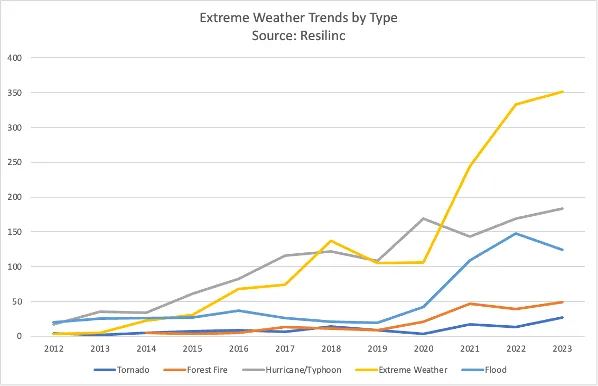
A graph showing how extreme weather events have increased significantly in the past few years.
A graph showing Resilinc’s Extreme Weather Trends data from 2012 to 2023. While all disruptions show increased growth, Extreme Weather disruptions saw a significant jump from 2020 to 2023.


In fact, Resilinc’s CEO, Bindiya Vakil, named Climate Change as one of the top five supply chain megatrends for 2024. Data from Resilinc’s 24/7, AI-powered supply chain monitoring platform EventWatchAI supports this trend. From 2021 to 2023, the platform saw a 44% increase in alerts related to extreme weather—growing from 244 disruptions in 2021 to 351 this past year. With more disruptions on the horizon, we’ve laid out the key climate change supply chain disruptions for 2024 in this blog with practical insights and strategies to navigate these challenges.


 1. Drought

An image of dry land affected by a drought showing how climate change will impact supply chains.

Record-breaking temperatures in 2023 exacerbated global droughts. According to the Global Drought Snapshot report for 2023 published by the UN Convention to Combat Desertification (UNCCD), data from the past two years shows that drought is one of the most severe problems we face. In 2023, global temperatures rose 1.18°C (34.1°F) above preindustrial levels. If that number reaches 1.5°C (34.7°F), the report projects 120 million people worldwide will experience extreme drought.

The U.S. Geological Survey agrees that droughts are a major problem stating, “Climate change has further altered the natural pattern of droughts, making them more frequent, longer, and more severe.” Many sectors are affected by droughts, including agriculture, energy, water, utilities, and manufacturing. Here’s a look at two recent major droughts that have impacted supply chains:

Panama Canal Drought Impact on Supply Chain

In 2023, the Panama Canal, one of the world’s most important waterways, faced one of the driest years in over 140 years. Water shortages burdened Panama Canal shippers with extraordinary delays and cost increases, serving as a reminder to greater consider changing climate and weather patterns in supplier contracting and logistics planning. For now, the Panama Canal has eased until April 2024—allowing 24 vessels to pass through per day. In April, the Panama Canal Authority will reevaluate water levels. If rain arrives in May as expected, the canal plans to increase daily slots with a goal of returning to 36 vessels per day.

Drought in China Impact on Supply Chain  

The Yangtze River Basin, home to Asia’s longest river, boasts a staggering annual cargo volume of over 3 billion tonnes. However, low rainfall and rising temperatures have accelerated evaporation, causing water levels in the river to plummet. In August 2022, these water levels fell to 60% below average, marketing the lowest levels seen since 1865. This drought impacted hydropower, disrupted shipping, and affected five million people in southern China, according to the World Meteorological Organization.

See how heatwaves and drought lead to power outages in Vietnam in our Special report. Learn more. 


2. El Nino

An image showing waves crashing over a pier.

El Niño, a cyclical climate pattern characterized by warmer waters in the Pacific Ocean, is expected to have significant implications for global supply chains in 2024. Returning after four years, El Niño is predicted to peak in the first half of the year, leading to extreme weather conditions like heavy rainfall, flooding, and storms. These conditions could potentially impact supply chain logistics and transportation by sea, air, and land.

While the system often brings heavy rainfall to the Southern US and Mexico, this can result in drought in other regions such as Australia, Indonesia, parts of southern Asia, and Central and West Africa. As a result, this could lead to crop failures and affect the availability and pricing of some agricultural products. Delicate crops such as sugar, rice, and wine grapes are especially at risk of being affected by outlier conditions in 2024. Learn more about the effects of El Nino and what you can do to prepare your supply chain in our white paper: El Nino Supply Chain Impact Analysis.


3. Hurricane Season
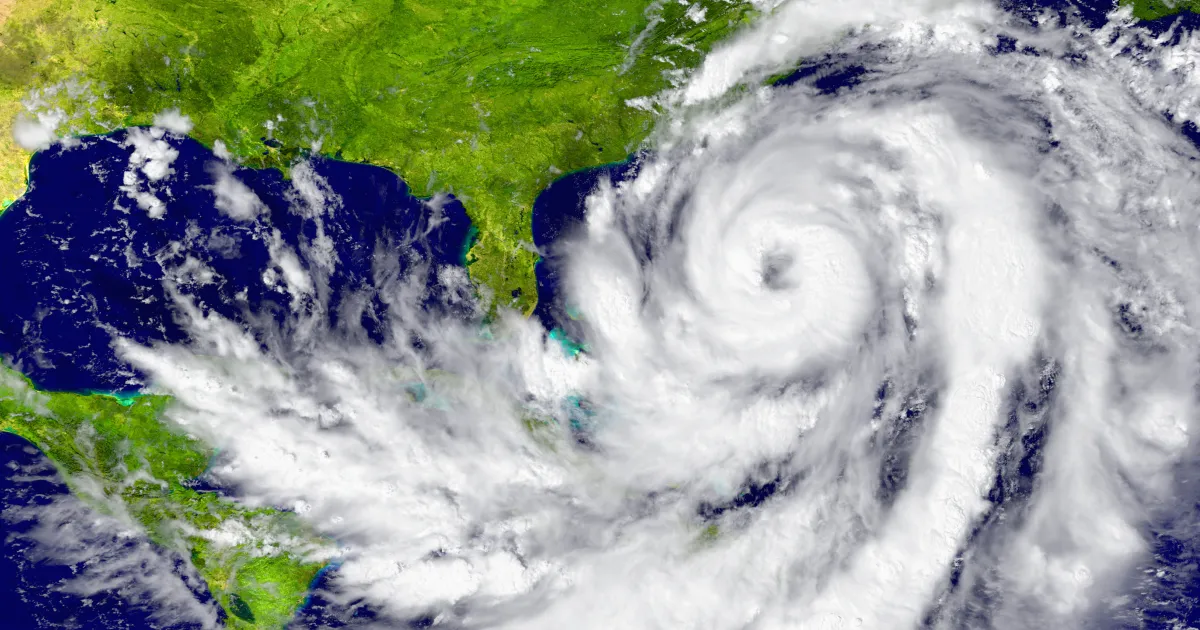
An aerial view of a hurricane.

Hurricanes are another extreme weather event that can impact global supply chains, resulting in lost or delayed shipments, port disruptions, canceled cargo flights, and unbalanced supply and demand. For example, in 2022, Hurricane Ian damaged more than $416 million in citrus crops in Florida—half of all citrus consumers by Americans.

According to the National Oceanic and Atmospheric Administration (NOAA) the 2023 Atlantic hurricane season ranked fourth for most-named storms in a year. Will 2024 continue this trend with El Niño on the way? This year, Hurricane season is set to last from June 1 through November 30.


4. Wildfires and Forest Fires

A forest burning with huge flames and smoke.

Wildfires, often fueled by climate change-induced droughts, pose a threat to global supply chains in 2024. With record-breaking wildfires scorching millions of acres in North America—particularly in Canada, where over 42 million acres were burned in 2023—the impact on logistics, transportation networks, and overall business operations has the potential to be significant. Forest fires globally are burning nearly twice as much tree cover compared to two decades ago, exacerbating supply chain disruptions with extensive delays and expenses.

Climate change is expected to worsen droughts and wildfires in many regions. Global cotton supplies are considered especially vulnerable to worsening droughts, heat waves, and wildfires, according to an analysis by climate risk consultancy Acclimatise. The Cotton 2040 report finds that half of global cotton-producing regions will be at greater risk by 2040. While cotton is only a $12 billion industry, it makes up 31% of raw materials used in the textile and apparel industries, which have a global economic impact of $600 billion. Although fire seasons are starting earlier and lasting longer in many regions, there is still seasonality to fire risk, which allows for proactive risk mitigations.


Outlook for 2024: Impact of Climate Change on the Supply Chain

Hurricanes, droughts, floods, and wildfires are escalating, posing significant challenges to infrastructure, economies, and livelihoods worldwide. The drought in the Panama Canal underscores the repercussions of climate change on critical global trade routes. Water scarcity also poses significant risks, driving down crop yields and escalating food prices while exacerbating socio-economic disparities and geopolitical tensions, as seen in conflicts over water resources among nations like Turkey, Syria, and Iraq. It also threatens semiconductor production, with a single fab requiring millions of gallons of water daily.

Such incidents are warning signs of a future where climate-related disruptions become the norm. Ignoring this reality puts supply chains at increasing financial risk, with the World Bank estimating climate change could cost developing countries $500 billion annually by 2050. Geopolitical cooperation is crucial in tackling climate change, evidenced by initiatives like the Paris Agreement binding 196 countries since 2015. Despite domestic efforts such as the US Inflation Reduction Act promoting renewable energy investment, challenges persist, representing ongoing risks in the year ahead.


What can your company do to become more resilient to climate change? 

Building resilience requires proactive measures like investing in supply chain risk management programs and technology. Businesses that recognize the climate threat and actively mitigate it won’t just be safeguarding their operations—they’ll be gaining a competitive edge in a world increasingly grappling with the consequences of a changing climate.

This starts with mapping sites across the world that supply your business—several tiers below your direct suppliers. Mapping is a resource- and time-intensive activity, but Resilinc’s hybrid approach to Multi-Tier Mapping can streamline the process for your company.

Then, identify suppliers and sites that are essential to your company’s highest revenue solutions and initiate risk assessments focused on those sites with services and a dive into historical climate and supplier performance data. This will help uncover the extent of previous weather-related disruptions and the climate trends for a particular site or region. Want to learn more about how Resilinc can help your company become more resilient in the face of climate change? Elevate your supply chain risk and resiliency program: Request a demo today.


Key Insights

Recent Posts

Hidden supply chain exposure in the new 50% Canada tariffs

4 hidden risks lurking beyond tier-1 suppliers

How agentic AI is redefining the supply chain maturity model

How Roche Diagnostics built a supply chain that can’t afford to fail

How agentic AI helps supply chains prepare for the USMCA review

The future of supply chain intelligence is headless

Belden’s shift to supply chain decision intelligence

EUDR is changing supply chains faster than most companies expected

About Resilinc

We’re the world’s leading supply chain monitoring, mapping, and resiliency solution. Over 100k organizations partner with us to take their SCRM programs from reactive to resilient.

Request Demo

Recent Blogs

Loading...
Canadian tariffs image
Jul 23, 2026
6 MIN READ
Resilinc Editorial Staff

Hidden supply chain exposure in the n...

A new 50% U.S. tariff on Canadian goods creates hidden supply chain exposure across 554 HTSUS codes. See where your business may be affected.
A new 50% U.S. tariff on Canadian goods creates hidden supply chain exposure...
Tariffs and Trade
Image of 4 hidden supply chain risks
Jul 17, 2026
5 MIN READ
Resilinc Editorial Staff

4 hidden risks lurking beyond tier-1 ...

Think your supply chain is diversified? Hidden dependencies beyond Tier-1 suppliers can create unexpected disruptions. Learn the four upstream risks most organizations overlook.
Think your supply chain is diversified? Hidden dependencies beyond Tier-1 suppliers can create...
AI, AI Agents
Diagram of a modern maturity curve
Jul 13, 2026
4 MIN READ
Resilinc Editorial Staff

How agentic AI is redefining the supp...

Discover how agentic AI is transforming the supply chain maturity model with multi-tier visibility, intelligent automation, and AI-powered risk management insights.
Discover how agentic AI is transforming the supply chain maturity model with multi-tier...
AI, AI Agents
Read All Blogs
resilinc logo footer

Join the ranks of successful companies that rely on Resilinc to proactively protect their supply chain, safeguard their balance sheet, and gain a competitive edge.

Company

  • About Resilinc
  • Careers
  • Partners
  • Resilinc Academy
  • About Resilinc
  • Careers
  • Partners
  • Resilinc Academy

Products

  • Agentic AI Suite
  • AI Agents
  • Multi-Tier Mapping
  • RiskShield
  • EventWatchAI
  • Agentic AI Suite
  • AI Agents
  • Multi-Tier Mapping
  • RiskShield
  • EventWatchAI

Resources

  • Blog
  • Research and Insights
  • Events and Webinars
  • News and Press
  • Case Studies
  • Online Learning
  • Industry Awards
  • R Score
  • Glossary
  • Sitemap
  • Blog
  • Research and Insights
  • Events and Webinars
  • News and Press
  • Case Studies
  • Online Learning
  • Industry Awards
  • R Score
  • Glossary
  • Sitemap

Support & Legal

  • Customer Support
  • Contact Us
  • Legal
  • Customer Support
  • Contact Us
  • Legal
resilinc logo footer

Join the ranks of successful companies that rely on Resilinc to proactively protect their supply chain, safeguard their balance sheet, and gain a competitive edge.

Company

  • About Resilinc
  • Careers
  • Partners
  • Resilinc Academy
  • About Resilinc
  • Careers
  • Partners
  • Resilinc Academy

Products

  • Agentic AI Suite
  • AI Agents
  • Multi-Tier Mapping
  • RiskShield
  • EventWatchAI
  • Agentic AI Suite
  • AI Agents
  • Multi-Tier Mapping
  • RiskShield
  • EventWatchAI

Resources

  • Blog
  • Research and Insights
  • Events and Webinars
  • News and Press
  • Case Studies
  • Online Learning
  • Industry Awards
  • R Score
  • Glossary
  • Sitemap
  • Blog
  • Research and Insights
  • Events and Webinars
  • News and Press
  • Case Studies
  • Online Learning
  • Industry Awards
  • R Score
  • Glossary
  • Sitemap

Support & Legal

  • Customer Support
  • Contact Us
  • Legal
  • Customer Support
  • Contact Us
  • Legal
X-twitter Linkedin Facebook

© 2026 Resilinc Corporation. All rights reserved.

Data Security

Privacy Statement