
Skip to content
Supply Chain Risk Management – Resilinc
  • Products
        • OUR OFFERINGS

        • Agentic AI SuiteAutonomous risk management and compliance
        • AI AgentsIndustry and use case-specific analysis and action
        • Multi-Tier Mapping and MonitoringComplete end-to-end supplier visibility
        • RiskShieldProactive supply chain risk protection
        • EventWatchAIReal-time global event tracking
  • Solutions
        • BY INDUSTRY

          • Aerospace and Defense
          • Healthcare and Life Sciences
          • Automotive and Industrial
          • High Tech and Semiconductor
        • BY ROLE

          • Supply Chain Resiliency
          • Sourcing and Procurement
          • Executive Leadership
          • AI and Data Science
        • BY TOPIC

          • Supply Chain Risk Management
          • Supply Chain Compliance
        • BY SERVICE

          • Advisory Services
          • Managed Services
  • Resources
        • LEARN

        • Blog
        • Special Reports
        • Demos and Training
        • Case Studies
        • White Papers and Reports
        • Podcasts and Webinars
        • ROI Calculator
  • Company
        • ABOUT US

        • Careers
        • About Resilinc
        • Events
        • Press Releases
        • In the News
        • Partners
        • Contact Us
Sign In
Schedule Demo
Supply Chain Risk Management – Resilinc
  • Products
    • Agentic AI Suite
    • AI Agents
    • Multi-Tier Mapping and Monitoring
    • RiskShield
    • EventWatchAI
  • Solutions
    • By Industry
      • Aerospace and Defense
      • Healthcare and Life Sciences
      • Automotive and Industrial
      • High-Tech and Semiconductor
    • By Role
      • Supply Chain Resiliency
      • Sourcing and Procurement
      • Executive Leadership
      • AI Data Scientists
    • By Topic
      • Supply Chain Risk Management
      • Supply Chain Compliance
    • By Service
      • Advisory Services
      • Managed Services
  • Resources
    • Blog
    • Special Reports
    • Demos and Training
    • Case Studies
    • White Papers and Reports
    • Podcasts and Webinars
    • ROI Calculator
  • Company
    • About Resilinc
    • Careers
    • Events
    • Press Releases
    • In the News
    • Partners
    • Contact Us
  • Sign In
  • Schedule Demo
  • Products
    • Agentic AI Suite
    • AI Agents
    • Multi-Tier Mapping and Monitoring
    • RiskShield
    • EventWatchAI
  • Solutions
    • By Industry
      • Aerospace and Defense
      • Healthcare and Life Sciences
      • Automotive and Industrial
      • High-Tech and Semiconductor
    • By Role
      • Supply Chain Resiliency
      • Sourcing and Procurement
      • Executive Leadership
      • AI Data Scientists
    • By Topic
      • Supply Chain Risk Management
      • Supply Chain Compliance
    • By Service
      • Advisory Services
      • Managed Services
  • Resources
    • Blog
    • Special Reports
    • Demos and Training
    • Case Studies
    • White Papers and Reports
    • Podcasts and Webinars
    • ROI Calculator
  • Company
    • About Resilinc
    • Careers
    • Events
    • Press Releases
    • In the News
    • Partners
    • Contact Us
  • Sign In
  • Schedule Demo

Home / Blogs / 8 Steps to Minimize Tariff Impact on Your Business

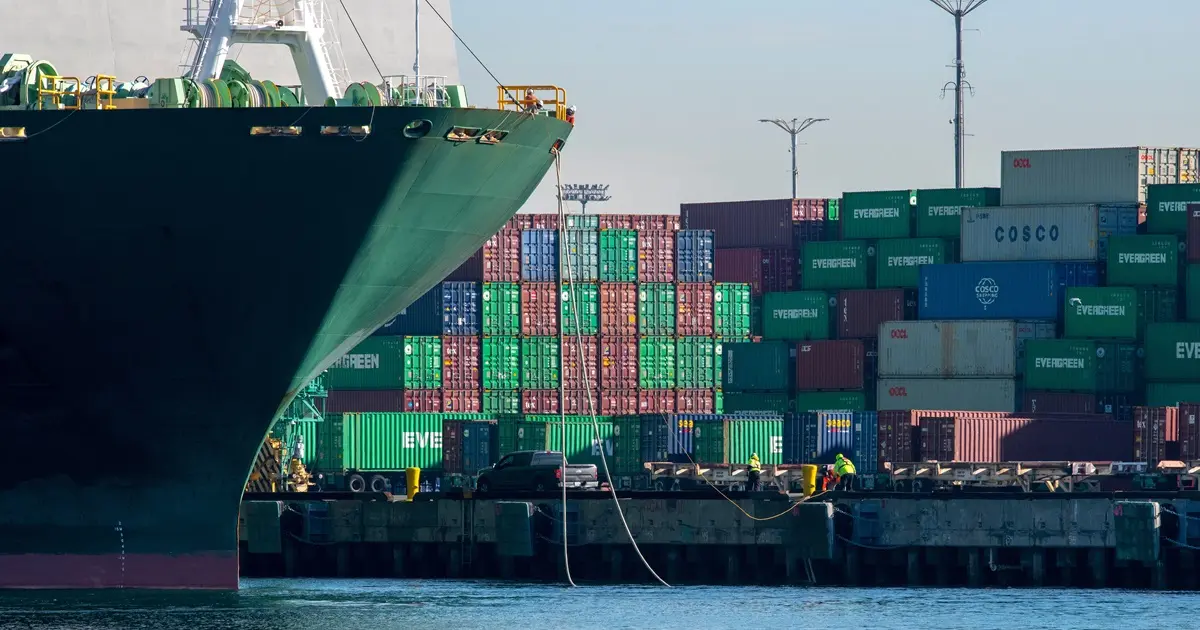
Cargo ship with containers

8 Steps to Minimize Tariff Impact on Your Business

Oct 24, 2025

Resilinc Editorial Team

Supply Chain Risk Management, Tariffs and Trade

How tariffs reshape supply chain risk management

Tariff policies don’t just change the cost of doing business, they can reshape entire risk management strategies overnight.

Whether you’re dealing with Section 301 tariffs, regional trade disputes, or new protectionist measures, the challenge is the same: How do you respond strategically rather than reactively?

The key is having a structured approach that moves beyond guesswork, leveraging ai-driven tariff monitoring tools that continuously monitor changes and suggest responsive actions in real time.

This tariff impact decision tree helps supply chain and procurement teams assess exposure, quantify financial impact, and explore mitigation strategies in a logical, prioritized sequence.


Step 1: Identify your tariff exposure

Question: Do tariffs affect your imported materials, components, or finished goods?

Start by mapping where tariffs touch your supply chain. This isn’t just about finished goods—it includes raw materials, sub-components, and even packaging that crosses borders.

  • No exposure? You’re not off the hook. Implement real-time tariff monitoring to track policy updates so you’re not caught off guard by future changes.
  • Yes, you’re exposed? Move to Step 2 to understand the financial impact.

To do this effectively, consider using an autonomous mapping solution like Resilinc. AI-powered tools offer a fast and easy approach as a first step towards multi-tier visibility—helping to surface hidden vulnerabilities as trade dynamics shift.


Step 2: Quantify the financial impact

Question: Can you estimate total tariff costs as a percentage of landed cost or margin?

Understanding the scale of impact helps prioritize your response. Calculate tariff costs relative to your landed cost or profit margin to determine urgency.

  • < 5% impact: Monitor closely and model low-impact scenarios.
  • 5–15% impact: Evaluate whether you can absorb costs or make minor supplier adjustments.
  • > 15% impact: This threatens margins and competitiveness. Move immediately to Step 3 for strategic sourcing review.

If you’re using a tariff intelligence platform, this is where automation can accelerate impact modeling—estimating costs at the part, supplier, or country level, often in minutes instead of days.


Step 3: Review sourcing options

Question: Are alternative suppliers available outside of tariff-affected regions?

If tariffs are eating into margins, alternative sourcing may be your fastest path to relief.

  • Yes, alternatives exist? Run a cost-benefit analysis that includes price, quality, lead time, and switching costs. Don’t just chase lower tariffs, evaluate total landed cost and risk.
  • No viable alternatives? Move to Step 4 to explore tariff risk management strategies.


Step 4: Explore mitigation strategies

Question: Can the product be re-classified, re-engineered, or qualify for an FTA or duty drawback?

Sometimes the answer isn’t changing supplier, it’s changing how products are classified or manufactured.

Work with trade compliance and legal teams to explore:

  • Product re-classification under HS codes
  • Re-engineering to shift country of origin or reduce tariff-triggering components
  • Free Trade Agreements (FTAs) or duty drawback programs
  • Yes, mitigation is possible? Implement with oversight from trade compliance.
  • No clear mitigation path? Continue to Step 5.

Modern AI-powered tools like Resilinc’s Tariffs Agent can automatically flag reclassification opportunities and identify applicable trade agreements—all without requiring deep internal trade compliance expertise.


Step 5: Evaluate your supply chain footprint

Question: Would nearshoring or onshoring reduce tariff and risk exposure?

If tariffs persist long-term, it may be time to rethink your manufacturing footprint. Nearshoring and onshoring aren’t just tariff plays, they can also reduce lead times, transportation risk, and geopolitical exposure.

  • Yes, footprint changes make sense? Run scenario models comparing total landed cost, time-to-market, and long-term resilience.
  • Not feasible? Move to Step 6.

Resilinc’s platform helps you model these decisions with confidence. Use AI-driven scenario planning to compare total landed cost, lead times, and revenue impact across multiple footprint strategies.


Step 6: Make operational adjustments

Question: Can logistics or inventory strategy absorb tariff volatility?

Even if you can’t change sourcing immediately, operational adjustments can buy time and reduce impact.

Consider:

  • Adjusting safety stock levels
  • Consolidating shipments to reduce per-unit costs
  • Changing entry ports to leverage lower tariff zones or faster clearance
  • Yes, operational levers exist? Implement adjustments and monitor effectiveness.
  • No operational flexibility? Proceed to Step 7.


Step 7: Consider changes to your pricing and customer strategy

Question: Can costs be shared or passed through without major market loss?

At some point, you may need to have the pricing conversation. The key is transparency and timing.

  • Yes, pricing adjustments are viable? Update pricing models and communicate clearly with customers about tariff impacts. Frame it as a shared challenge, not just a price increase.
  • No, the market won’t absorb costs? Return to Step 3 and reassess sourcing or engineering redesign.


Step 8: Implement continuous monitoring, mitigation, and governance

Since tariff regulations shift frequently, managing them must be treated as an adaptive, ongoing process.

AI-driven tariff monitoring—like Resilinc’s Tariffs Agent—can monitor changes, calculate exposure updates, and recommend mitigation workflows as policies evolve, helping teams shift from reaction to readiness.

The Resilinc Tariffs Agent offers:

  • Real-time monitoring of global tariff changes
  • Instant impact analysis
  • Smart sourcing recommendations
  • “What-if” tariff scenario modeling
  • Automated supplier outreach workflows

To ensure ongoing alignment between tariff strategy and business performance, it’s critical to track how tariff exposure evolves over time. Establish quarterly reviews of key metrics to validate mitigation efforts and guide future decisions:

  • Landed cost delta
  • Margin erosion
  • Tariff exposure


A smarter way to stay ahead of tariffs disruption

Tariffs are disruptive, but they don’t have to derail your supply chain strategy. By following this decision tree and applying effective tariff risk management strategies, you can focus on strategic planning: assessing exposure, exploring options, and building resilience into your sourcing and operations.

The organizations that thrive aren’t the ones unaffected by tariffs; they’re the ones who respond with a modern agentic AI approach for faster, more intelligent outcomes.

Need help tracking your tariff exposure or modeling alternative sourcing scenarios? Consider how AI agents can reduce the manual burden by delivering real-time insights tailored to your supply chain footprint.

View Resilinc’s AI Tariffs Agent demo.

View demo

Key Insights

Recent Posts

What China’s Rare-Earth Export Pause Reveals About Trade Policy Supply Chain Risk

Top 5 General Manufacturing Supply Chain Disruptions in Q3 2025

What the Nexperia Crisis Means for the Global Semiconductor Supply Chain

Will Your Supply Chain’s Compliance and Risk Management Withstand the Next Crisis?

8 Steps to Minimize Tariff Impact on Your Business

Government Supply Chains Face a New Compliance Frontier

Supply Chain Teams Are Drowning in Data—AI Agents Throw the Lifeline

Shaping the Future of Supply Chains with Agentic Supply Chain Resiliency at NASCES 2025

About Resilinc

We’re the world’s leading supply chain monitoring, mapping, and resiliency solution. Over 100k organizations partner with us to take their SCRM programs from reactive to resilient.

Request Demo

Recent Blogs

Loading...
Mineral rare earth element on green electronic circuit board background copy space. US vs China chip war, tech war, semiconductor industry concept. China curbs on exports of rare earth element to US.
Nov 12, 2025
6 MIN READ
Resilinc Editorial Team

What China’s Rare-Earth Export Pause ...

On November 7, 2025, China’s Ministry of Commerce (MOFCOM) and the General Administration...
Geopolitical, Rare earth minerals, Supply Chain Risk Management
Two project managers standing in modern industrial factory, looking at laptop screen. Manufacturing facility with robotics, robotic arms and automation. Storing products and materials in warehouse.
Nov 11, 2025
3 MIN READ
Resilinc Editorial Team

Top 5 General Manufacturing Supply Ch...

From fires and floods to shifting regulations and extreme weather, general manufacturing faced...
Manufacturing, Supply Chain Risk Management
Silicon semiconductor wafer close-up. In electronics, a wafer also called a slice or substrate is a thin slice of semiconductor, a crystalline silicon, used for the fabrication of integrated circuits
Nov 06, 2025
7 MIN READ
Resilinc Editorial Team

What the Nexperia Crisis Means for th...

A governance crisis becomes a global test of resilience In the final week...
Geopolitical, Supply Chain Risk Management
Read All Blogs
resilinc logo footer

Join the ranks of successful companies that rely on Resilinc to proactively protect their supply chain, safeguard their balance sheet, and gain a competitive edge.

Company

  • About Resilinc
  • Careers
  • Events
  • Press Releases
  • In the News
  • Partners
  • Resilinc Academy
  • About Resilinc
  • Careers
  • Events
  • Press Releases
  • In the News
  • Partners
  • Resilinc Academy

Products

  • Agentic AI Suite
  • AI Agents
  • Multi-Tier Mapping
  • RiskShield
  • EventWatchAI
  • Agentic AI Suite
  • AI Agents
  • Multi-Tier Mapping
  • RiskShield
  • EventWatchAI

Resources

  • Blog
  • Special Reports
  • Demos and Training
  • Case Studies
  • White Papers
  • Podcasts and Webinars
  • ROI Calculator
  • Glossary
  • Sitemap
  • Blog
  • Special Reports
  • Demos and Training
  • Case Studies
  • White Papers
  • Podcasts and Webinars
  • ROI Calculator
  • Glossary
  • Sitemap

Support & Legal

  • Customer Support
  • Contact Us
  • Legal
  • Customer Support
  • Contact Us
  • Legal
resilinc logo footer

Join the ranks of successful companies that rely on Resilinc to proactively protect their supply chain, safeguard their balance sheet, and gain a competitive edge.

Company

  • About Resilinc
  • Careers
  • Events
  • Press Releases
  • In the News
  • Partners
  • Resilinc Academy
  • About Resilinc
  • Careers
  • Events
  • Press Releases
  • In the News
  • Partners
  • Resilinc Academy

Products

  • Agentic AI Suite
  • AI Agents
  • Multi-Tier Mapping
  • RiskShield
  • EventWatchAI
  • Agentic AI Suite
  • AI Agents
  • Multi-Tier Mapping
  • RiskShield
  • EventWatchAI

Resources

  • Blog
  • Special Reports
  • Demos and Training
  • Case Studies
  • White Papers
  • Podcasts and Webinars
  • ROI Calculator
  • Glossary
  • Sitemap
  • Blog
  • Special Reports
  • Demos and Training
  • Case Studies
  • White Papers
  • Podcasts and Webinars
  • ROI Calculator
  • Glossary
  • Sitemap

Support & Legal

  • Customer Support
  • Contact Us
  • Legal
  • Customer Support
  • Contact Us
  • Legal
X-twitter Linkedin Facebook

© 2025 Resilinc Corporation. All rights reserved.

Data Security

Privacy Statement

Magic Quadrant-popup

Resilinc Named a Leader by Gartner® in the 2025 Magic Quadrant™

Download the report and discover why we were placed in the Leaders quadrant

Download Report