
Build resilient, AI-powered supply chains for high tech and semiconductors
In an industry where supply disruptions delay billions in innovation, Resilinc equips you with the visibility, agility, and intelligence needed to stay competitive—despite export bans, labor shortages, or geopolitical shocks.
Key challenges
Tackle the toughest challenges in high tech and semiconductor supply chains
High tech and semiconductor companies face mounting supply chain risk as global pressures increase. Staying compliant and resilient requires new levels of visibility and control.
Talent gaps in risk functions are weakening internal risk management and slowing response times to disruption
Restricted access to critical materials trigger compliance challenges and expose single-source dependencies
Frequent executive transitions complicate supplier oversight and delay critical risk and compliance decisions across global operations.
Value to you
Transform complexity into clear, proactive decisions
Anticipate risks before they escalate
Avoid heavy financial impacts with actionable insights into high-tech disruptions, including labor strikes, M&A, and factory fires.
Map to the part-site level
Illuminate component, site, and supplier-level risks with AI-led multi-tier mapping—covering 4M+ parts across 800K+ suppliers.
Adapt quickly to regulatory shifts
Stay ahead of Forced Labor regulations, CHIPS Act, and EU import bans with built-in compliance assessments and real-time commodity risk insights.
Prioritized Alerts
Track global threats in real time
Receive AI-prioritized alerts across 100+ languages and 50 disruption categories—including weather, export bans, and cyber events.
- Monitor 104M+ sources globally
- Identify affected parts, suppliers, and regions instantly
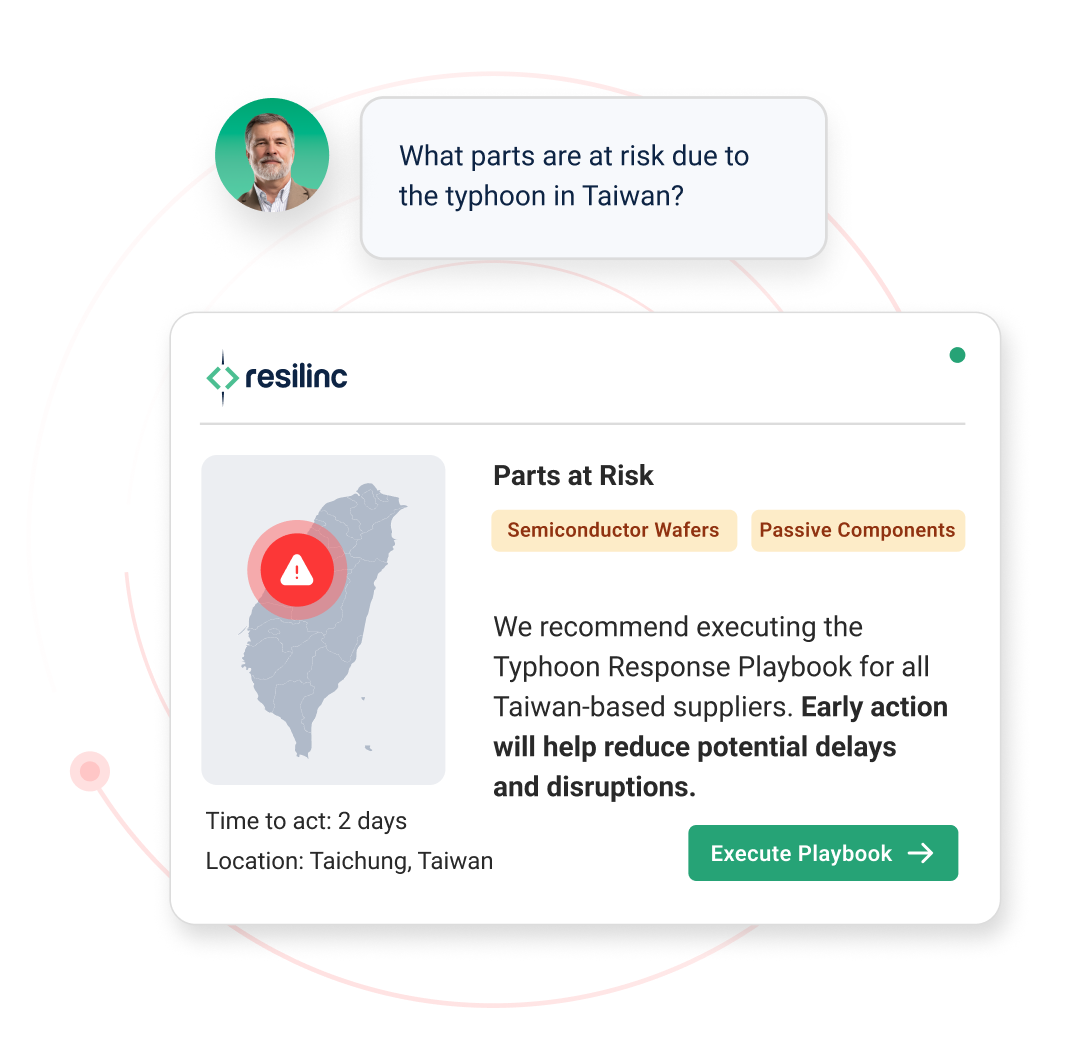
Threat Identification
Navigate export restrictions with confidence
Understand the ripple effects of bans on gallium, germanium, cobalt, and PFAS—and proactively adjust sourcing strategies.
- Receive alerts tied to restricted materials and export shifts
- Model alternate sourcing and impact scenarios
- Strengthen ESG alignment with supplier assessments
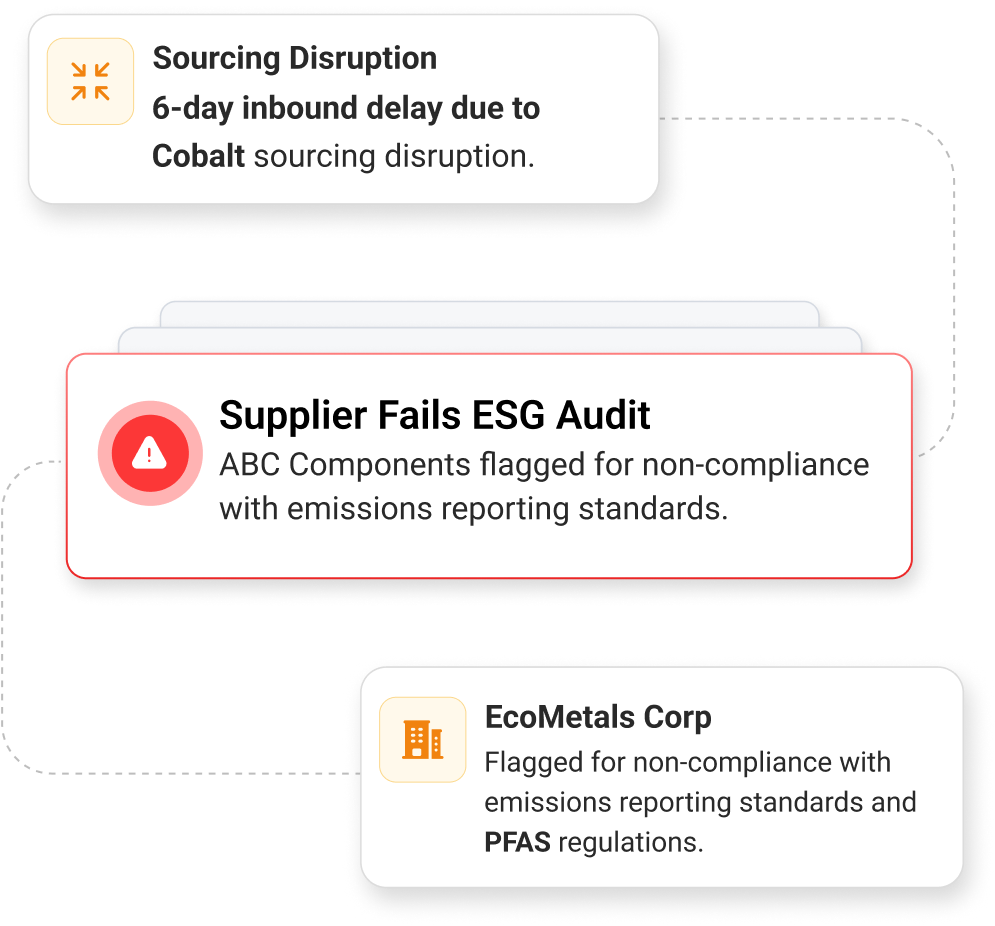
Comprehensive Compliance
Strengthen compliance and resiliency readiness
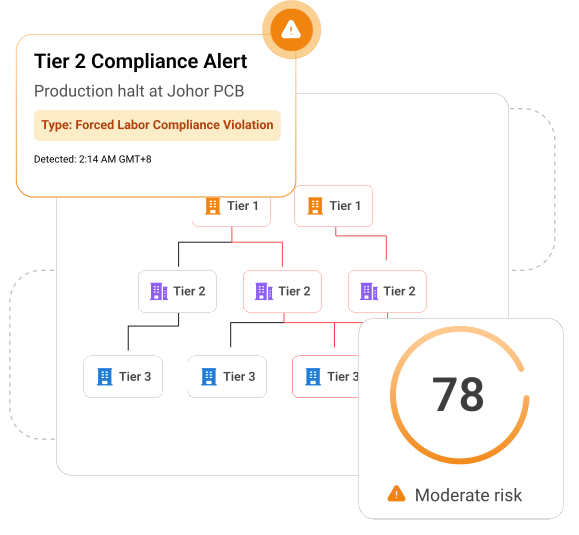
Move beyond tier-1 visibility with smart supplier collaboration tools and risk scoring.
- Pinpoint your most critical, disruption-prone suppliers
- Validate sites and parts using AI + supplier-submitted data
- Close gaps tied to CHIPS Act eligibility, ESG, or compliance
By the numbers
Disruption at the speed of innovation
Turn early warning signals into action across your high tech and semiconductor supply chain.
YoY increase in high-tech supply chain threats
surge in supply shortages across semiconductors and electronics
increase in power outages in key tech production regions
Helpful resources
Explore high tech and semiconductor supply chain trends and insights



FAQs
High tech and semiconductor industries: What you need to know
AI can help high tech and semiconductor companies identify emerging disruptions faster by monitoring global risk signals, supplier activity, restricted materials, geopolitical events, weather events, cyber risks, and other disruption categories. For semiconductor supply chains, this allows teams to move from reactive issue management to earlier risk detection, impact assessment, and proactive supplier mitigation. Resilinc’s page specifically highlights AI-prioritized alerts across 100+ languages and 50 disruption categories. Multi tier supplier visibility helps organizations:
- Improve supply chain resilience
- Identify supplier dependencies
- Monitor lower tier supplier risks
- Reduce production bottlenecks
- Strengthen supplier traceability
Multi-tier supplier visibility is critical because many semiconductor risks occur beyond direct tier-1 suppliers. A disruption at a component, site, sub-tier supplier, or restricted-material source can affect production even when primary suppliers appear stable. By mapping risks to the part, site, supplier, and regional level, high tech companies can better understand exposure, identify single-source dependencies, and respond before disruptions affect production schedules. The page notes Resilinc’s AI-led multi-tier mapping across millions of parts and hundreds of thousands of suppliers.
Semiconductor companies can prepare for export restrictions by monitoring policy changes, identifying affected materials and suppliers, modeling alternate sourcing scenarios, and assessing supplier compliance exposure. Materials such as gallium, germanium, cobalt, and PFAS can create sourcing, compliance, and production risks when restrictions or import bans change. The page already calls out the need to understand ripple effects from restricted materials and proactively adjust sourcing strategies.
High tech companies should look for a platform that provides real-time disruption monitoring, AI-prioritized alerts, multi-tier supplier mapping, part-site-level risk visibility, compliance assessments, and supplier collaboration tools. The goal is to help supply chain, procurement, compliance, and executive teams identify which suppliers, parts, regions, and materials are most at risk, then act quickly with data-backed mitigation plans. Resilinc’s page positions these capabilities around real-time threat tracking, restricted-material risk, compliance readiness, and proactive decision-making.
Protect innovation with resilient supply chain intelligence
See how Resilinc helps high-tech leaders navigate the risks that threaten uptime, growth, and competitive advantage.