
Skip to content
Supply Chain Risk Management – Resilinc
  • Products
        • AGENTIC AI SUITE

          • AI Suite OverviewAutonomous risk and compliance management
          • SC WatchProactive risk detection
          • SC MonitorIntelligent risk management
          • SC CommandFull-spectrum risk control
        • AI AGENTS

          • AI Agent OverviewScenario-specific analysis and action
          • Tariffs AgentBuilt-in protection from tariff risk
          • Forced Labor Compliance AgentAlways-on compliance, instant response
          • Disruption AgentConfident execution through disruption
        • FEATURED CAPABILITIES

          • EventWatchAIReal-time global event tracking
          • Multi-Tier MappingComplete end-to-end supplier visibility
          • RiskShieldProactive supply chain risk protection
  • Solutions
        • BY INDUSTRY

          • Aerospace and Defense
          • Healthcare and Life Sciences
          • Automotive and Industrial
          • High Tech and Semiconductor
        • BY ROLE

          • Supply Chain Resiliency
          • Sourcing and Procurement
          • Executive Leadership
          • AI and Data Science
        • BY TOPIC

          • Supply Chain Risk Management
          • Supply Chain Compliance
        • BY SERVICE

          • Advisory Services
          • Managed Services
  • Resources
        • RESOURCES

          • Blog Discover current trends and perspectives in supply chain to grow your business
          • Research and Insights Access data-driven insights, research, reports, and expert-led analysis
          • Events and Webinars Join upcoming webinars, conferences, and live events
          • News and Press Explore Resilinc announcements, press coverage, and media recognition
          • Case Studies See how organizations use Resilinc to solve real-world supply chain challenges
          • Online Learning Build expertise with interactive demos, tutorials, and self-paced training
  • Company
        • ABOUT US

        • Careers
        • About Resilinc
        • Partners
        • Contact Us
Sign In
Schedule Demo
Supply Chain Risk Management – Resilinc
  • Products
    • Agentic AI Suite
      • AI Suite Overview
      • SC Watch
      • SC Moitor
      • SC Command
    • AI Agents
      • AI Agent Overview
      • Tariffs Agent
      • Forced Labor Compliance Agent
      • Disruption Agent
    • Featured Capabilities
      • EventWatchAI
      • Multi-Tier Mapping
      • RiskShield
  • Solutions
    • By Industry
      • Aerospace and Defense
      • Healthcare and Life Sciences
      • Automotive and Industrial
      • High-Tech and Semiconductor
    • By Role
      • Supply Chain Resiliency
      • Sourcing and Procurement
      • Executive Leadership
      • AI Data Scientists
    • By Topic
      • Supply Chain Risk Management
      • Supply Chain Compliance
    • By Service
      • Advisory Services
      • Managed Services
  • Resources
    • Blog
    • Research and Insights
    • Events
    • News and Press
    • Case Studies
    • Online Learning
  • Company
    • About Resilinc
    • Careers
    • Partners
    • Contact Us
  • Sign In
  • Schedule Demo
  • Products
    • Agentic AI Suite
      • AI Suite Overview
      • SC Watch
      • SC Moitor
      • SC Command
    • AI Agents
      • AI Agent Overview
      • Tariffs Agent
      • Forced Labor Compliance Agent
      • Disruption Agent
    • Featured Capabilities
      • EventWatchAI
      • Multi-Tier Mapping
      • RiskShield
  • Solutions
    • By Industry
      • Aerospace and Defense
      • Healthcare and Life Sciences
      • Automotive and Industrial
      • High-Tech and Semiconductor
    • By Role
      • Supply Chain Resiliency
      • Sourcing and Procurement
      • Executive Leadership
      • AI Data Scientists
    • By Topic
      • Supply Chain Risk Management
      • Supply Chain Compliance
    • By Service
      • Advisory Services
      • Managed Services
  • Resources
    • Blog
    • Research and Insights
    • Events
    • News and Press
    • Case Studies
    • Online Learning
  • Company
    • About Resilinc
    • Careers
    • Partners
    • Contact Us
  • Sign In
  • Schedule Demo

Home / Blogs / How Will Trump’s Proposed Tariffs Impact Trade and Supply Chain?

How Will Trump’s Proposed Tariffs Impact Trade and Supply Chain?

How Will Trump’s Proposed Tariffs Impact Trade and Supply Chain?

Nov 14, 2024

Resilinc Editorial Team

Tariffs and Trade

A look at how Trump’s proposed tariffs impact trade and supply chain including supply chain projections and actionable steps businesses can take to prepare now.

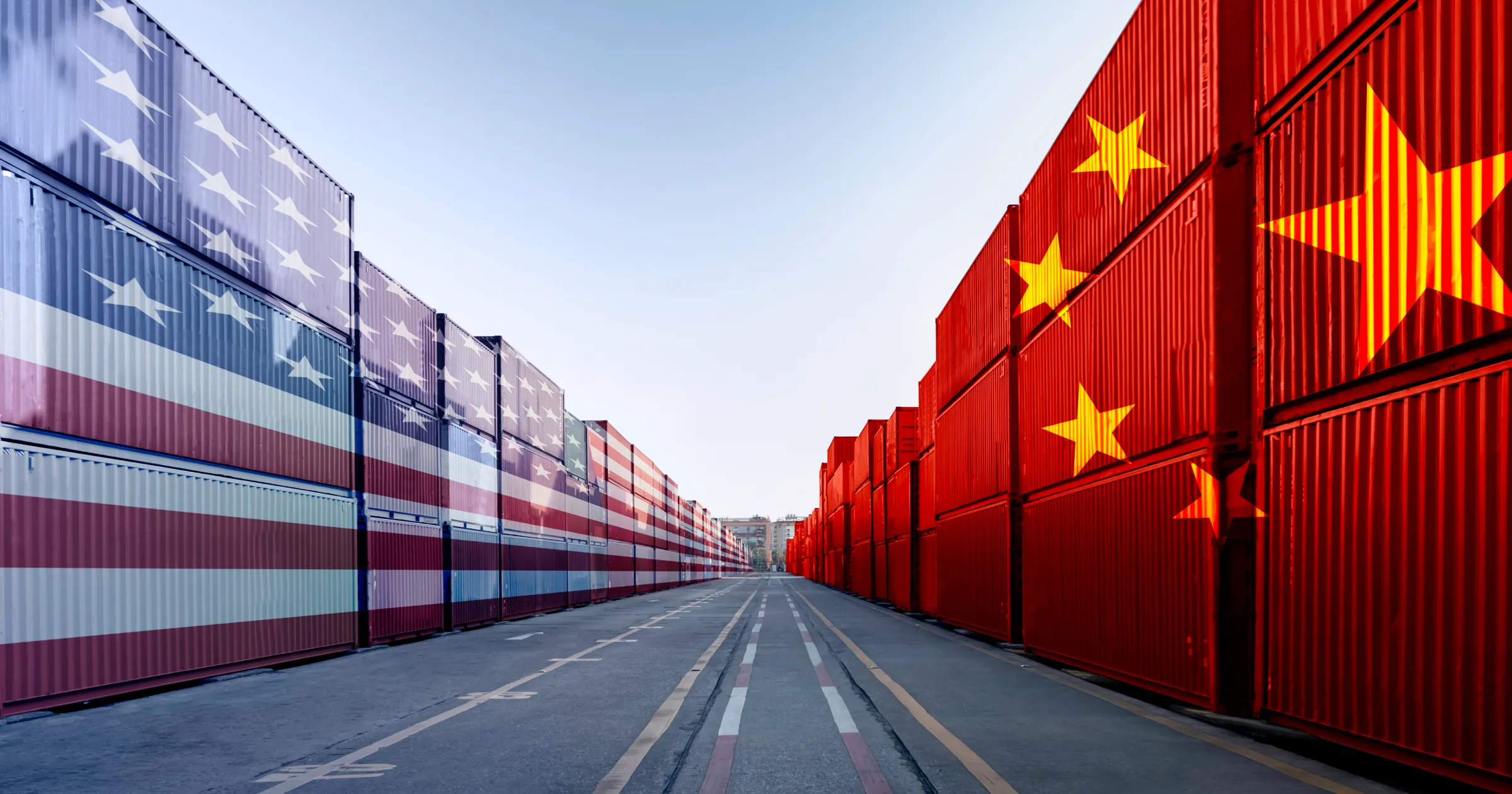
As President-elect Donald Trump prepares for his presidential transition, businesses are left wondering what the new administration will mean from a supply chain and trade perspective. As a major proponent of import taxes, Trump has proposed a 60% tariff on all goods from China and a 10-20% tariff on all other imports into the United States. The tariffs’ impact on trade would have a wide-ranging effect on consumer goods, even for locally manufactured products that rely on parts from around the world. Numerous industries like automotive, appliances, industrial, defense, pharmaceuticals, and high-tech electronics would likely be affected.

While nothing is set in stone, businesses must start to prepare for the potential impact of these tariffs now to ensure business continuity under the new administration and into 2025. In this blog, we explore supply chain projections, the challenges of reshoring, and the actions that businesses can take to prepare their supply chains now.


Trump’s Proposed Tariffs Impact on Trade

#1 Increase in Prices  

Tariffs could have far-reaching effects on consumer goods, including those produced domestically. Many products that Americans use daily rely on imported components. A substantial portion of items manufactured in the US—from appliances and industrial goods to pharmaceuticals, cars, and electronics—include imported parts. For instance, key smartphone components such as processors, displays, and batteries are often sourced from countries like China, South Korea, and Taiwan. If these cost increases are passed on to consumers, tariffs could ultimately influence consumer purchasing behavior.


#2 Retaliatory Tariffs from Other Countries

When Trump was previously in office, the administration applied tariffs on steel, aluminum Chinese imports, and automotive imports. Within a year, other countries enacted numerous retaliatory tariffs on US imports in response. For example, China placed tariffs on tens of billions of dollars’ worth of US exports, and The European Union and Canada responded to steel and aluminum tariffs by imposing tariffs of their own. While it will be hard to predict how different countries will react this time, with sweeping tariffs affecting all imports, similar reactions from other countries are likely.


#3 Mexico a Net Beneficiary

Mexico is becoming more attractive due to its low labor costs, proximity, and potentially lower tariffs compared to China. In fact, Mexico was the United States’ top trading partner in 2024, surpassing China for the first time in over twenty years. In recent years, as companies have started increasing nearshoring initiatives, Mexico has become a critical part of these strategies.

With costs potentially rising for Chinese goods, Central America could benefit as a nearshore option—even with a 10% tariff. Other countries like Vietnam, Thailand, and India are also emerging as alternatives to China for manufacturing and may benefit from the tariffs.


#4 Lobbying for Tariff Exemptions

Following the tariffs enacted under the Trump Administration, many US companies responded by lobbying for product exemptions to safeguard their finances and operations. Apple, for instance, received 10 out of 15 requested exemptions for items like computer chargers and mice that were solely available from China. This time, certain products may face even greater tariff impacts. Automotive parts, which frequently cross the Mexico-US border, could incur rising costs with each crossing. This might prompt automakers to lobby for exemptions on these specific parts.


#5 Tariffs on Specific Companies

Chinese companies have increasingly shifted production to countries like Vietnam, making China Vietnam’s largest trading partner in 2023, with trade totaling $172 billion. To prevent Chinese products from being rerouted through other countries to reach the US, tariffs or sanctions on specific companies may be considered. In recent years, for instance, the US has imposed significant sanctions on Chinese telecommunications companies like Huawei and ZTE, citing national security concerns. Instead of broad country-specific tariffs, we may see targeted measures aimed at particular companies.


Challenges of Nearshoring and Reshoring

As a result of the tariffs, more companies may look to reshoring and nearshoring alternatives, but both come with their own hurdles. First, setting up a new factory—especially in the US—can cost millions of dollars, including the cost of building, equipment, permitting, etc. Plus, labor in the US is expensive. For instance, the average manufacturing wage as of January 2022 in the US was $24.55 per hour, compared to an average of $2.80 per hour in Mexico.

Next, while relocating from China or other countries may help companies avoid tariffs, it also introduces new challenges. For instance, Intel’s effort to establish a semiconductor plant in Arizona faces the hurdle of a severe water shortage, a critical issue for facilities that require an uninterrupted water supply. Meanwhile, Intel’s planned site in Ohio avoids this issue but faces a shortage of workers.

As Resilinc CEO Bindiya Vakil put it, “The US is not a risk-free region. Nowhere is risk-free. When you go from Region A, where you have these five types of risk, to Region B, where you have these five types of risk, you’re inheriting a new set of problems, so you have to go into new regions eyes wide open.” Other rising risks in the US include escalating costs, extreme weather events, social unrest, and labor strikes. By reshoring or nearshoring, companies may mitigate certain risks but encounter a new set of uncertainties, potentially impacting supply chain stability.


How Can Companies Prepare for Trump’s Proposed Tariffs Impact on Trade

Key steps for readiness:

  1. Map supply chains to understand product origins and assess tariff exposure.
  2. Model ‘what-if’ scenarios to quantify potential business impacts.
  3. Prepare detailed data for exclusion requests and to support rapid adjustments.
  4. Evaluate supply chain diversification options, balance risks and benefits by region.
  5. Anticipate potential shifts in consumer behavior and financial impacts.
  6. Closely monitor announcements on tariffs and exemption procedures.

The most important step companies can take to prepare for upcoming tariffs is to map their supply chains, identifying where their products and components originate, and which could be affected. During the 2016–2020 tariff period, companies that had already mapped their supply chains using Resilinc’s Multi-Tier Mapping solution were well-positioned to file for exemptions, while others struggled to react within the five-month exclusion window.

The next year will be a very dynamic and fast-moving environment. It will be hard to predict where change may come from. Will specific companies be sanctioned? Will other countries enact retaliatory tariffs? To prepare, companies must expect uncertainty and create an action plan ahead of time for these supply chain projections—not later. Ultimately, companies that map their supply chains, model potential scenarios, and collect data on their supply chain early will be better positioned to respond quickly and effectively as tariffs are rolled out.

Learn more about the latest US tariff increases that are already impacting Chinese imports. See how these tariffs affect key sectors such as semiconductors, electric vehicle (EV) battery materials, and medical equipment in our special report: Impact of US Commodity Tariffs and Potential Outlook.


Download Report

Key Insights

Recent Posts

Belden’s shift to supply chain decision intelligence

EUDR is changing supply chains faster than most companies expected

What it takes to stay ahead of semiconductor disruptions

Preparing for pharmaceutical tariffs in 2026

Why Resilinc Is a Gartner® Magic Quadrant™ Leader for the Second Year

Why 95% of supply chain teams lack early warning confidence

From visibility to compliance: What EU battery regulations really require

A silent aluminum shortage is taking shape

About Resilinc

We’re the world’s leading supply chain monitoring, mapping, and resiliency solution. Over 100k organizations partner with us to take their SCRM programs from reactive to resilient.

Request Demo

Recent Blogs

Loading...
Image of Design Intelligence
Jun 03, 2026
4 MIN READ
Gopkiran Rao, CMO, Resilinc

Belden’s shift to supply chain decisi...

I’ve sat through a lot of supply chain presentations over the years. Most follow...
SCRM Best Practices
Deforestation image
May 29, 2026
4 MIN READ
Resilinc Editorial Staff

EUDR is changing supply chains faster...

The European Union Deforestation Regulation (EUDR) is forcing companies to confront a difficult reality: most...
Regulatory compliance
semiconductor image
May 15, 2026
4 MIN READ
Resilinc Editorial Staff

What it takes to stay ahead of semico...

A recap of our May 13, 2026 webinar with Rick Freeman and Chris...
AI Agents, High-Tech, Semiconductor
Read All Blogs
resilinc logo footer

Join the ranks of successful companies that rely on Resilinc to proactively protect their supply chain, safeguard their balance sheet, and gain a competitive edge.

Company

  • About Resilinc
  • Careers
  • Partners
  • Resilinc Academy
  • About Resilinc
  • Careers
  • Partners
  • Resilinc Academy

Products

  • Agentic AI Suite
  • AI Agents
  • Multi-Tier Mapping
  • RiskShield
  • EventWatchAI
  • Agentic AI Suite
  • AI Agents
  • Multi-Tier Mapping
  • RiskShield
  • EventWatchAI

Resources

  • Blog
  • Research and Insights
  • Events and Webinars
  • News and Press
  • Case Studies
  • Online Learning
  • Glossary
  • Sitemap
  • Blog
  • Research and Insights
  • Events and Webinars
  • News and Press
  • Case Studies
  • Online Learning
  • Glossary
  • Sitemap

Support & Legal

  • Customer Support
  • Contact Us
  • Legal
  • Customer Support
  • Contact Us
  • Legal
resilinc logo footer

Join the ranks of successful companies that rely on Resilinc to proactively protect their supply chain, safeguard their balance sheet, and gain a competitive edge.

Company

  • About Resilinc
  • Careers
  • Partners
  • Resilinc Academy
  • About Resilinc
  • Careers
  • Partners
  • Resilinc Academy

Products

  • Agentic AI Suite
  • AI Agents
  • Multi-Tier Mapping
  • RiskShield
  • EventWatchAI
  • Agentic AI Suite
  • AI Agents
  • Multi-Tier Mapping
  • RiskShield
  • EventWatchAI

Resources

  • Blog
  • Research and Insights
  • Events and Webinars
  • News and Press
  • Case Studies
  • Online Learning
  • Glossary
  • Sitemap
  • Blog
  • Research and Insights
  • Events and Webinars
  • News and Press
  • Case Studies
  • Online Learning
  • Glossary
  • Sitemap

Support & Legal

  • Customer Support
  • Contact Us
  • Legal
  • Customer Support
  • Contact Us
  • Legal
X-twitter Linkedin Facebook

© 2026 Resilinc Corporation. All rights reserved.

Data Security

Privacy Statement